

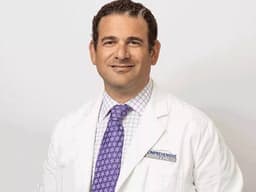
Dr. Joseph E. Weinstein, DO
Board-Certified Orthopedic Surgeon & Founder
4.9(18 Google reviews)Speaks English
Chronic back pain can feel like a full-time job. It affects how you move, how you sleep and how you feel. Surgery can feel daunting, yet living with daily pain is worse. For many patients, injections are the step in between.

 Dr. Weinstein, Dr. Castro
If medication is no longer enough but surgery feels too soon, or is not right for you, interventional pain management may help. Dr. Joseph E. Weinstein, DO, and Dr. Carlos Castro, MD, find the source of your pain and treat it with image-guided injections that reduce inflammation, calm irritated nerves and help you get back to your life.
When oral medication and physical therapy do not give enough relief, an injection in the lower back or neck can make a real difference. These are not painkillers in the usual sense. They deliver anti-inflammatory medicine directly to the irritated part of the spine.
A pill travels through your whole body. An injection places the medicine right where the problem is. This allows for:
We offer a full range of spinal injections, chosen to match your diagnosis.
Sciatica, herniated discs and spinal stenosis often involve inflamed spinal nerves. An epidural steroid injection delivers a strong anti-inflammatory corticosteroid into the epidural space, the area just outside the spinal cord and nerve roots.
Best for:
The procedure:
Dr. Weinstein or Dr. Castro uses fluoroscopic (X-ray) guidance to place a fine needle near the inflamed nerve root. The procedure takes only minutes, and relief can last for months, giving your body time to heal or to progress in physical therapy.
The facet joints are small joints along the back of the spine that let you bend and twist. Like knees and hips, they can develop arthritis, which causes a deep, aching low back pain that makes bending or standing up difficult.
A facet joint injection places an anesthetic and a steroid directly into the joint.
Best for:
Sometimes the goal is to interrupt the pain signal itself. A medial branch block temporarily numbs the small nerves that carry pain from the facet joints. If it relieves your pain, that confirms the diagnosis. We can then perform radiofrequency ablation (RFA), which uses heat to quiet those nerves for longer-lasting relief, typically 6 to 12 months or more.
The SI joint connects the spine to the pelvis. It is a common and often overlooked source of lower back and hip pain. A precisely placed injection can calm inflammation in the joint and bring significant relief.
You have many options for orthopedic care in New York and New Jersey. Here is why patients trust us with their spine care.
Every injection is image-guided. Real-time X-ray imaging places the medicine exactly where it is needed, which improves relief and reduces risk.
Dr. Joseph Weinstein is a board-certified orthopedic surgeon who trained in spine surgery at Hospital for Special Surgery (HSS). Dr. Carlos Castro is a fellowship-trained spine surgeon who trained at HSS, Yale and Twin Cities Spine Center. Both understand how the spine works and how to treat it.
As surgeons, we know when surgery helps and when it does not. Injections are one of the treatments we offer alongside physical therapy and surgery, so your plan fits your diagnosis.
A “shot in the spine” can sound worrying. Every step is designed with your comfort in mind.
You do not have to “just live with” back pain. Whether you have a chronic ache or sciatica, Comprehensive Orthopedic & Spine Care can help you get your pain under control. Request an appointment below or call our office to schedule a consultation.
Most patients feel pressure rather than sharp pain. We numb the skin and tissue with a local anesthetic before the injection.
It varies. Some patients get a few weeks of relief, others several months or longer. The goal is to break the cycle of pain so you can make progress in rehabilitation.
We recommend having someone drive you home, especially if your legs may feel numb for a short time or if you received sedation.
We usually limit steroid injections to three or four a year because of the possible side effects of the medicine.
Board-Certified Orthopedic Surgeon & Founder
4.9(18 Google reviews)Speaks English

Learn when microdiscectomy may help a herniated disc, what recovery involves, expected outcomes, risks, and when to seek a spine surgery opinion.

Understand when laminectomy may relieve spinal stenosis, what recovery involves, key risks, and when decompression alone or fusion may be considered.