
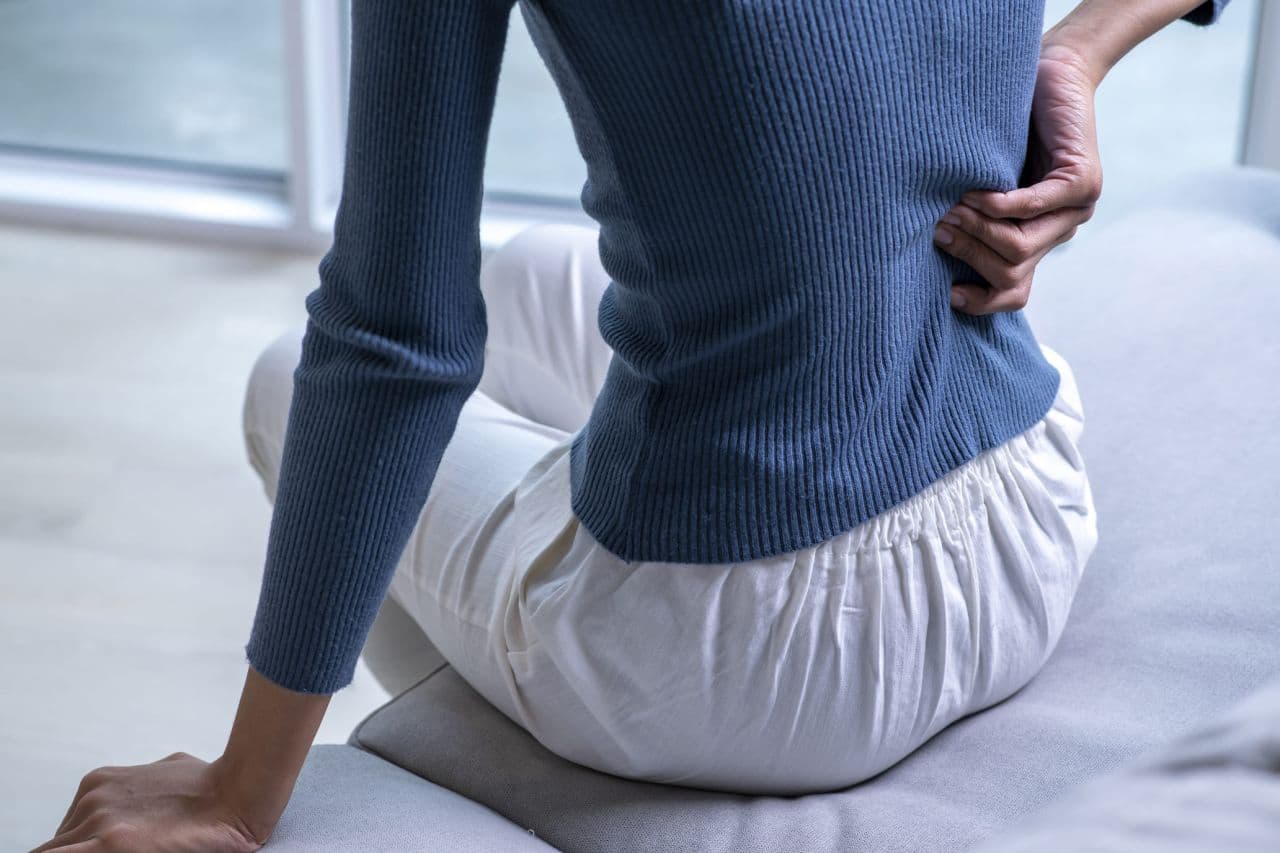
It begins with a twinge in your lower back. Next, a searing pain shoots down your leg. You blink your eyes, and simply sitting in a chair or walking to the mailbox is an ordeal. If that situation rings a bell, perhaps you're one of the millions of Americans who have lumbar radiculopathy, which is generally known as sciatica or a pinched nerve.
For many patients, finding relief from lower back and leg pain becomes a process of trial and error. You don’t have to figure it out alone. At Comprehensive Orthopedic & Spine Care, Dr. Joseph E. Weinstein and Dr. Carlos Castro specialize in diagnosing the underlying causes of radiculopathy and providing effective treatment to help you get back on your feet. In most cases, conservative treatments are all you need to find relief from radiculopathy pain.
What is Lumbar Radiculopathy?
Medical Definition of Radiculopathy
When a nerve root in the spine is compressed or irritated, it becomes known as radiculopathy. When this happens in your lumbar spine, you start cutting into the nerve roots, and that doesn’t just hurt in your back—it radiates.
The sciatic nerve, the largest in your body, starts at your spinal cord and runs through your hips and buttocks and then down each of your legs. When a nerve root that feeds into the sciatic nerve is pinched, it broadcasts those pain signals all along that pathway.
Common Symptoms
- Sudden, shooting pains that extend from the lower back and down into the hip.
- Numb or tingle ("pins and needles") in the leg or foot.
- Muscle weakness in the leg.
- Pain that increases and decreases while coughing, sneezing or sitting for prolonged periods.
What is a Pinched Nerve?
Knowing the why is the beginning of sciatica relief. In our NYC metro area practice, the following are some of the more common offenders:
1. Herniated Discs
Most typically, this is the cause. The soft, jelly-like center of a spinal disc bulges out through a tear in the tougher outer surface, pressing against what’s known as a nerve root.
2. Spinal Stenosis
The spinal canal may narrow in later life from arthritis or excessive bone growth. This narrowing (stenosis) jams the nerves, causing compression.
3. Degenerative Disc Disease
Discs gradually dehydrate and lose height. This shrinking increasingly restricts the space through which nerves can emerge from the spine.
4. Spondylolisthesis
This is when a vertebra moves forward over another and pinches the nerve roots.
Getting a Diagnosis
You cannot treat effectively if you have not accurately diagnosed. “Sciatica” is a description of the symptom.
Our diagnostic process is meticulous at Comprehensive Orthopedic & Spine Care:
- Physical Examination: We check your reflexes, muscle strength, and the range of motion of your joints. The straight leg raise test is a staple of nerve irritation discrimination.
- Imaging: X-rays enable us to visualize the alignment of the bone. An MRI can clearly visualize the soft disc and nerves and quite precisely locate where we are pinching.
- EMG/NCS: In selective cases, we can use electroneuromyography (EMG) to evaluate how well your nerves are conducting impulses to muscles.
Non-Surgical Treatment Options
The good news? The majority of lumbar radiculopathy cases do not require surgery. We believe in really wearing out the conservative pinched nerve treatments.
Physical Therapy
Targeted exercises are crucial. You can learn from a physical therapist:
- Core strengthening to support your spine.
- Stretching techniques to relieve pressure on the sciatic nerve.
- Posture correction to prevent future flare-ups.
Medication Management
- NSAIDs (such as ibuprofen) to help soothe inflammation.
- Oral steroids for a short-term attack.
- Muscle relaxants are used if muscle spasms are adding to the pain.
- Gabapentin/Pregabalin for nerve pain only>
Interventional Pain Management
Injections can help when oral medication is not enough.
Epidural Steroid Injections: A powerful anti-inflammatory drug is administered into the space around the inflamed nerve root. This can bring relief for weeks to months, so you can participate in PT better.
When Surgery is Necessary
If after 6-12 weeks conservative treatments have not been effective, or if you experience severe symptoms such as progressive weakness and/or loss of bladder/bowel function (Cauda Equina Syndrome – a medical emergency), surgery may be the right next step for lumbar radiculopathy relief.
Dr. Carlos Castro and Dr. Joseph Weinstein specialize in minimally invasive spine surgery.
Microdiscectomy
This is the most popular operation for a herniated disc. Using a small incision — usually less than an inch — the surgeon removes the part of the disc that is pressing against the nerve. The disc otherwise remains intact.
– Recovery: Most patients go home the same day, and leg pain often improves soon after surgery.
Laminectomy / Decompression
In the case of spinal stenosis, the surgeon cuts away a small amount of bone (the lamina) or thickened ligament that is squeezing the nerves, making more room in the spinal canal.
Spinal Fusion
In the case of an unstable spine, like spondylolisthesis, we may have to fuse two vertebrae so they don’t slip and put pressure on nerves. Current treatment methods mean that we can do this with very little disturbance to other muscles.
Prevention: Maintaining a Healthy Back
When you find relief, you want it to stick around.
- Smart Lifting: Not from your waist, but from your knees. Heavy objects should be kept near your body.
- Keep Active: Move-it is the game; sedentary behavior weakens the muscles that support your spine.
- Pay Attention to Your Posture: Make sure your workspace is ergonomic, especially if you sit at a desk or commute for long periods.
Begin Your Path to Relief
Leg pain does not have to control your life. Whether it is an occasional annoyance or a chronic problem that affects your work, Comprehensive Orthopedic & Spine Care can help.
Dr. Weinstein and Dr. Castro are fellowship-trained spine surgeons. The practice sees patients in Rego Park, Queens and Englewood, New Jersey.
Schedule your consultation today.
Call 718-313-0766 or schedule an appointment online.
Related conditions & treatments
Keep reading
Microdiscectomy Surgery for a Herniated Disc: Recovery, Results & When It Helps
Learn when microdiscectomy may help a herniated disc, what recovery involves, expected outcomes, risks, and when to seek a spine surgery opinion.
Laminectomy Surgery: When It’s Needed, Recovery Timeline & Fusion vs. Decompression
Understand when laminectomy may relieve spinal stenosis, what recovery involves, key risks, and when decompression alone or fusion may be considered.
This article is general information, not a diagnosis. If you have symptoms, see a physician.