
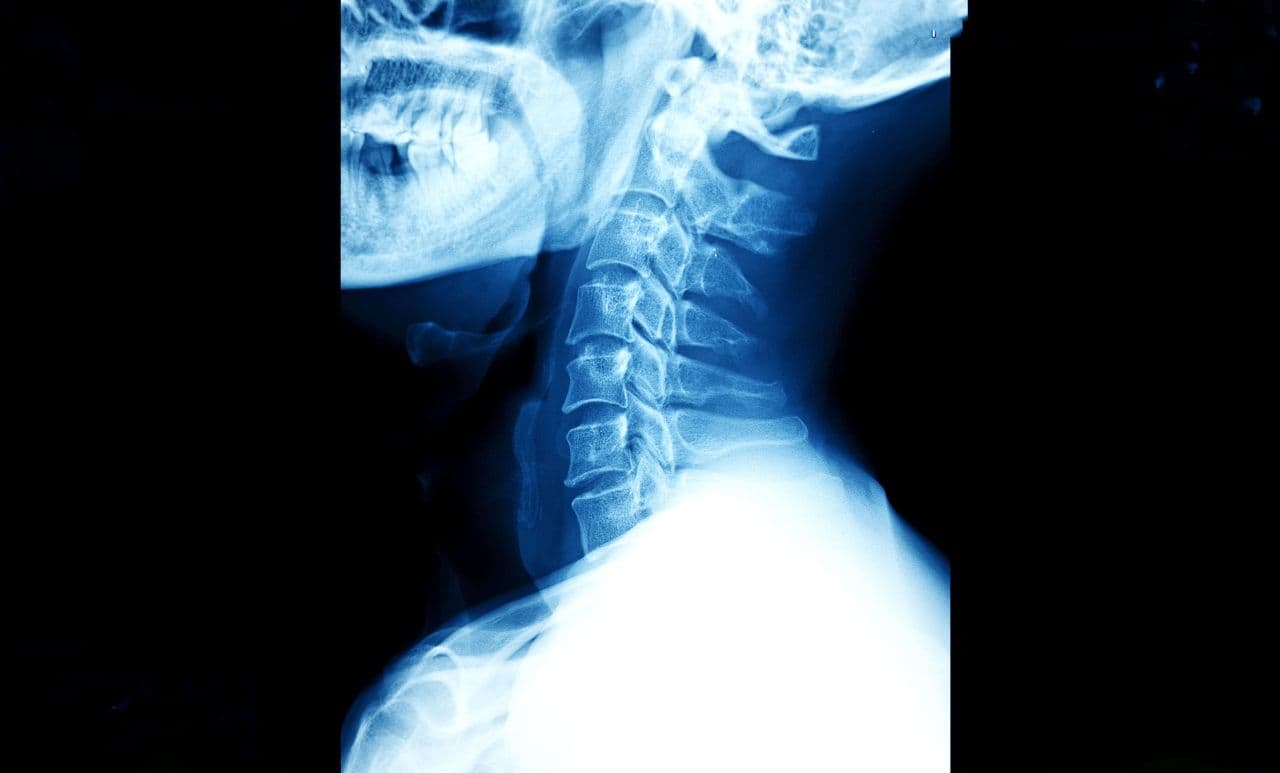
If you have a herniated disc in your neck, you know the feeling: the constant ache in your neck, the electric shocks down your arm, the numbness in your fingers that makes buttoning a shirt impossible.
When physical therapy and injections stop working, surgery becomes the conversation. For decades, the "gold standard" was to fuse the bones together (ACDF). But today, active patients in New York have a better option: Artificial Disc Replacement (ADR).
At Comprehensive Orthopedic & Spine Care, Dr. Carlos Castro and Dr. Joseph Weinstein are at the forefront of motion-preserving spine surgery. We don't just want to stop the pain; we want you to keep moving your neck.
The Old Standard: ACDF (Fusion)
Anterior Cervical Discectomy and Fusion (ACDF) has been performed since the 1950s.
- What it is: We remove the damaged disc and insert a bone graft and a metal plate to fuse the two vertebrae into a single solid bone.
- The Pro: It is incredibly reliable at stopping pain.
- The Con: You lose motion at that level. Worse, the stress transfers to the discs above and below, often causing them to fail 10 years later (Adjacent Segment Disease).
The Modern Solution: Cervical Disc Replacement (ADR)
Think of this like a knee replacement, but for your neck.
- What it is: We remove the damaged disc and replace it with a mechanical device (metal and plastic) that mimics the natural movement of your spine.
- The Pro: You keep your range of motion. You can look up, down, and turn your head naturally.
- The Biggest Benefit: Because the joint still moves, it protects the rest of your spine from wearing out.
Comparison: Which Is Right for You?
Not everyone is a candidate for replacement, but many are.
- Recovery Time: Spinal Fusion (ACDF): 3-6 months for bone to heal; Disc Replacement (ADR): 4-6 weeks (no bone healing needed)
- Collar/Brace: Spinal Fusion (ACDF): Often required for weeks; Disc Replacement (ADR): Usually not needed
- Range of Motion: Spinal Fusion (ACDF): Reduced; Disc Replacement (ADR): Preserved
- Long-Term Risk: Spinal Fusion (ACDF): Higher risk of adjacent disc failure; Disc Replacement (ADR): Lower risk of future surgery
- Best For: Spinal Fusion (ACDF): Severe arthritis, instability; Disc Replacement (ADR): Herniated discs, arm nerve pain
Why Choose Motion Preservation?
For our patients who are police officers, firefighters, or simply active parents, maintaining neck mobility is critical. Whether you are checking your blind spot while driving or looking overhead at a construction site, every degree of motion counts.
Dr. Castro and Dr. Weinstein are specially trained in these advanced devices. We believe that surgery should restore your lifestyle, not limit it.
The Surgery Experience
Both procedures are minimally invasive:
- Incision: A small, cosmetic skin crease incision in the front of the neck (about 1-2 inches).
- Timing: Usually takes less than 2 hours.
- Hospital Stay: Most patients go home the same day or the next morning.
- Pain: Surprisingly manageable. Many patients notice less arm pain soon after surgery.
Does Insurance Cover Disc Replacement?
Yes. While it was considered "experimental" 15 years ago, today virtually all major carriers—including GHI and Blue Cross Blue Shield—recognize the superior outcomes of disc replacement for qualified candidates. Our office handles the authorization process to ensure your technology is covered.
Get an Expert Evaluation
If you have been told you need a fusion, pause. You might have another option. Come see Dr. Castro and Dr. Weinstein for an evaluation to see if you are a candidate for motion-preserving Cervical Disc Replacement.
Preserve your motion. Protect your future. Call us today.
Related conditions & treatments
Keep reading

Cervical Radiculopathy: Arm Pain, Numbness & When Neck Surgery Is Considered
Pain that starts in the neck and travels into the shoulder, arm, hand, or fingers is often more than a muscle strain — it may be cervical radiculopathy, common…

Cervical Myelopathy: Symptoms, Diagnosis & Treatment Options
If your hands feel clumsy when buttoning a shirt, or you've noticed a subtle change in the way you walk — as if your balance isn't quite right — you may be experiencing early signs of cervical myelopathy, a progressive spinal cord condition that affects the neck.
This article is general information, not a diagnosis. If you have symptoms, see a physician.